How did the relationship between Franco's government and foreign investors evolve over time?
Similar Topics
{
"keywords": [
"franco government"
"foreign investors"
"spanish civil war"
"economic reforms"
"spanish miracle"
"foreign investment"
"multinational corporations"
"labor movements"
"democracy in spain"
"european economic community"
]
}
The relationship between Franco's government and foreign investors underwent significant changes from the post-Civil War period through the latter years of his regime. Initially, after the Spanish Civil War, Spain was largely isolated internationally due to its authoritarian regime and the aftermath of the conflict. This isolation resulted in economic stagnation, prompting Franco’s government to seek foreign investment as a means to revitalize the economy. In the 1950s, particularly after the signing of the Pact of Madrid in 1953, the United States and other Western nations began to invest in Spain, attracted by its strategic location during the Cold War. This influx of foreign capital and expertise marked a turning point, as Franco’s regime began to adopt more pragmatic economic policies that encouraged foreign businesses to set up operations in Spain.
As the 1960s progressed, the Spanish economy started to experience a remarkable transformation, which was partly fueled by foreign investment. The government implemented a series of economic reforms known as the "Spanish Miracle," promoting industrialization and tourism. During this period, Franco’s administration was increasingly willing to accommodate foreign interests, leading to the establishment of multinational corporations in Spain. The government’s focus on modernization and economic growth created a more favorable environment for investors, who were drawn by the possibilities of a burgeoning market. However, this also came with tensions, as domestic labor movements began to emerge, pushing back against foreign companies and demanding better working conditions.
By the late 1970s, as Spain transitioned toward democracy following Franco’s death in 1975, the relationship with foreign investors continued to evolve. The new democratic government sought to maintain the economic gains achieved during the previous decades while also addressing social issues and labor rights. Foreign investors remained crucial to Spain's economic landscape, and the country increasingly sought to align itself with the European community, paving the way for Spain’s entry into the European Economic Community in 1986. This shift marked a new era of cooperation and integration, laying the groundwork for Spain’s modern economy, which remains heavily influenced by foreign investment and tourism today.
As the 1960s progressed, the Spanish economy started to experience a remarkable transformation, which was partly fueled by foreign investment. The government implemented a series of economic reforms known as the "Spanish Miracle," promoting industrialization and tourism. During this period, Franco’s administration was increasingly willing to accommodate foreign interests, leading to the establishment of multinational corporations in Spain. The government’s focus on modernization and economic growth created a more favorable environment for investors, who were drawn by the possibilities of a burgeoning market. However, this also came with tensions, as domestic labor movements began to emerge, pushing back against foreign companies and demanding better working conditions.
By the late 1970s, as Spain transitioned toward democracy following Franco’s death in 1975, the relationship with foreign investors continued to evolve. The new democratic government sought to maintain the economic gains achieved during the previous decades while also addressing social issues and labor rights. Foreign investors remained crucial to Spain's economic landscape, and the country increasingly sought to align itself with the European community, paving the way for Spain’s entry into the European Economic Community in 1986. This shift marked a new era of cooperation and integration, laying the groundwork for Spain’s modern economy, which remains heavily influenced by foreign investment and tourism today.
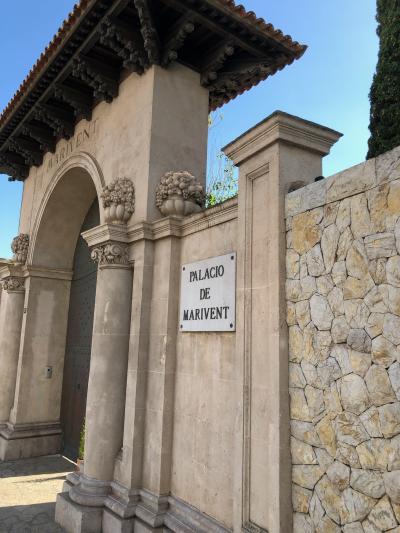
ses Illetes
More Fotos