What historical events are connected to the name "La Morenita"?
Similar Topics
La Morenita
Virgin of Guadalupe
Mexican Catholicism
Basilica of Our Lady of Guadalupe
Juan Diego
Tepeyac
Mexican War of Independence
cultural identity
religious pilgrimage
Mexican history
The name "La Morenita" is deeply intertwined with the rich history of Mexico, particularly in relation to the veneration of the Virgin of Guadalupe. The Virgin of Guadalupe is a central figure in Mexican Catholicism, and her image is often depicted as a dark-skinned woman, which is where the affectionate nickname "La Morenita" originates. This name celebrates her portrayal and symbolizes her connection to the indigenous population of Mexico. The most significant historical event connected to La Morenita is the apparition of the Virgin to Juan Diego in December 1531 on the hill of Tepeyac. This event marked a pivotal moment in the religious and cultural landscape of Mexico, solidifying the Virgin's importance among both indigenous peoples and Spanish colonizers.
In the years following the apparition, the Basilica of Our Lady of Guadalupe was constructed at the site, becoming one of the most visited pilgrimage sites in the world. The Virgin of Guadalupe played a crucial role in the unification of the diverse cultures in Mexico, serving as a symbol of identity and faith for many, particularly during the Mexican War of Independence in the early 19th century. Revolutionary leaders, including Miguel Hidalgo, invoked her name to inspire the fight for independence from Spanish rule. The reverence for La Morenita has persisted through the centuries, transcending political upheavals and social changes, and she remains a powerful emblem of Mexican culture and spirituality.
Today, the name La Morenita continues to resonate not only in religious contexts but also in cultural expressions such as art, music, and festivals. The annual celebrations in honor of the Virgin of Guadalupe on December 12 attract millions of devotees, showcasing her enduring legacy in contemporary Mexican society. Visitors to Mexico can experience this vibrant devotion firsthand, gaining insight into the historical significance of La Morenita and her impact on the nation's collective identity. Exploring the Basilica and its surroundings allows travelers to appreciate the profound connection many Mexicans have with La Morenita and the events that shaped their history.
In the years following the apparition, the Basilica of Our Lady of Guadalupe was constructed at the site, becoming one of the most visited pilgrimage sites in the world. The Virgin of Guadalupe played a crucial role in the unification of the diverse cultures in Mexico, serving as a symbol of identity and faith for many, particularly during the Mexican War of Independence in the early 19th century. Revolutionary leaders, including Miguel Hidalgo, invoked her name to inspire the fight for independence from Spanish rule. The reverence for La Morenita has persisted through the centuries, transcending political upheavals and social changes, and she remains a powerful emblem of Mexican culture and spirituality.
Today, the name La Morenita continues to resonate not only in religious contexts but also in cultural expressions such as art, music, and festivals. The annual celebrations in honor of the Virgin of Guadalupe on December 12 attract millions of devotees, showcasing her enduring legacy in contemporary Mexican society. Visitors to Mexico can experience this vibrant devotion firsthand, gaining insight into the historical significance of La Morenita and her impact on the nation's collective identity. Exploring the Basilica and its surroundings allows travelers to appreciate the profound connection many Mexicans have with La Morenita and the events that shaped their history.
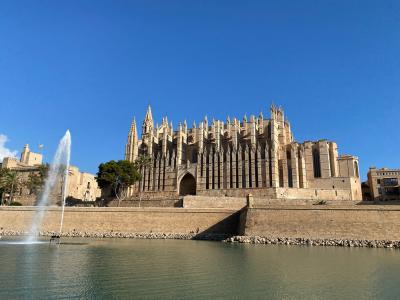
Palma
More Fotos