What role did religion play in Ramon Llull's life and works?
Similar Topics
Ramon Llull
religion and philosophy
Mallorca history
Crusades impact
interfaith dialogue
theological treatises
Ars method
13th century scholar
Christianity and reason
Llull's legacy
Ramon Llull, a prominent figure from the 13th century, was deeply influenced by his religious beliefs, which shaped both his life and his extensive body of work. Born in Mallorca, Llull was initially a courtier and a poet, but a transformative religious experience led him to dedicate his life to God and the pursuit of knowledge. He believed that understanding and promoting Christianity was essential in an increasingly diverse and often contentious world, especially in the context of the Crusades and the coexistence of Christians, Jews, and Muslims in the Mediterranean region. This conviction drove him to become a missionary and a scholar, aiming to convert non-Christians through reasoned argument rather than force.
Llull's writings reflect his desire to reconcile faith and reason, as he developed a unique philosophical and theological system. He created the "Ars" or Art, a method for demonstrating the truths of Christianity through logical reasoning and analysis. This innovative approach was not only groundbreaking for his time but also demonstrated his belief that faith should be accessible and understandable to all. His works, which include theological treatises, poetry, and philosophical explorations, emphasize the importance of love and the pursuit of divine truth, showcasing how integral religion was to his intellectual endeavors.
Through his travels and interactions with various cultures, Llull sought to bridge divides and foster dialogue among different religious communities. He established schools and wrote extensively in multiple languages, promoting a vision of a harmonious society rooted in mutual understanding and respect. His commitment to interfaith dialogue and his intellectual contributions left a lasting legacy, influencing future generations of thinkers and theologians. In exploring Llull's life and works, one can see how religion not only shaped his personal journey but also served as a catalyst for his broader mission of unity and understanding in a complex world.
Llull's writings reflect his desire to reconcile faith and reason, as he developed a unique philosophical and theological system. He created the "Ars" or Art, a method for demonstrating the truths of Christianity through logical reasoning and analysis. This innovative approach was not only groundbreaking for his time but also demonstrated his belief that faith should be accessible and understandable to all. His works, which include theological treatises, poetry, and philosophical explorations, emphasize the importance of love and the pursuit of divine truth, showcasing how integral religion was to his intellectual endeavors.
Through his travels and interactions with various cultures, Llull sought to bridge divides and foster dialogue among different religious communities. He established schools and wrote extensively in multiple languages, promoting a vision of a harmonious society rooted in mutual understanding and respect. His commitment to interfaith dialogue and his intellectual contributions left a lasting legacy, influencing future generations of thinkers and theologians. In exploring Llull's life and works, one can see how religion not only shaped his personal journey but also served as a catalyst for his broader mission of unity and understanding in a complex world.
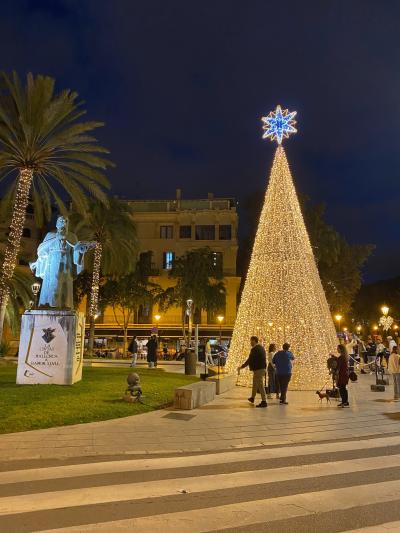
Palma
More Fotos




Related Questions
Related Question
How does the high season influx of visitors affect prices for food, accommodation, and services on the island?
Related Question
Do hotels in Palma and other Mallorcan towns offer special perks for guests who book directly?
Related Question
How do the coastal areas of Mallorca differ in vegetation from the mountainous regions?