How do the linguistic policies affect education in Mallorca?
Similar Topics
Mallorca education
bilingualism in Mallorca
Catalan language
Spanish language education
Balearic government policies
multilingual classrooms
cultural heritage Mallorca
language proficiency
education challenges Mallorca
social cohesion Mallorca
In Mallorca, linguistic policies play a significant role in shaping the education system and reflect the island's rich cultural heritage. The Balearic government promotes bilingualism, with both Catalan and Spanish recognized as official languages. This dual-language approach is designed to preserve the local language, Catalan, which is an essential part of the island's identity, while also ensuring that students are proficient in Spanish, the national language. As a result, education in Mallorca often includes instruction in both languages, with varying emphasis depending on the specific school and its curriculum.
Students typically learn core subjects in both Catalan and Spanish, which can foster a deep understanding of their local culture and history while also preparing them for broader communication in the Spanish-speaking world. However, this bilingual policy can lead to some challenges, particularly for students who come from families that predominantly speak one language. Schools often provide additional support for these students to help them achieve proficiency in both languages, ensuring that all children have equal opportunities to succeed academically. The impact of these linguistic policies is evident in the diverse classroom environments, where students are encouraged to embrace their multilingual abilities, ultimately enriching their educational experience and fostering social cohesion within the community.
Students typically learn core subjects in both Catalan and Spanish, which can foster a deep understanding of their local culture and history while also preparing them for broader communication in the Spanish-speaking world. However, this bilingual policy can lead to some challenges, particularly for students who come from families that predominantly speak one language. Schools often provide additional support for these students to help them achieve proficiency in both languages, ensuring that all children have equal opportunities to succeed academically. The impact of these linguistic policies is evident in the diverse classroom environments, where students are encouraged to embrace their multilingual abilities, ultimately enriching their educational experience and fostering social cohesion within the community.
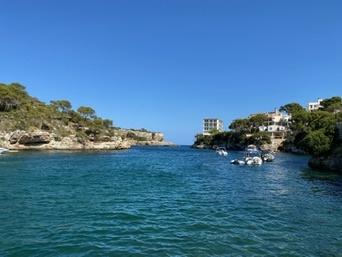
Cala Figuera
More Fotos