How did the historical trains contribute to Mallorca's development?
Similar Topics
Mallorca trains
historical trains Mallorca
Mallorca tourism
Palma to Inca line
Tramuntana mountains
Mallorca agriculture
Palma to Sóller train
Mallorca economy
vintage trains Mallorca
Mallorca cultural heritage
The historical trains of Mallorca played a significant role in shaping the island's development, particularly during the late 19th and early 20th centuries. The introduction of the railway system began in 1875 with the Palma to Inca line, which facilitated not only the movement of people but also the transportation of goods. This connection was crucial for Mallorca's agricultural economy, allowing farmers in the interior regions to transport their produce efficiently to the capital, Palma, where it could be sold in larger markets. As the railway expanded, it helped integrate the island’s various regions, fostering a sense of community and enabling trade between coastal towns and the more remote areas.
In addition to boosting agriculture, the trains played a key role in promoting tourism, which has become a cornerstone of Mallorca's economy. With the establishment of the scenic train line from Palma to Sóller in 1912, tourists were drawn to the island's natural beauty and charming towns. This railway not only provided a picturesque journey through the Tramuntana mountains but also linked Palma with the port town of Sóller, making it easier for visitors to explore the island's stunning landscapes and cultural heritage. The influx of travelers contributed to the development of infrastructure, including hotels, restaurants, and attractions, which further entrenched Mallorca as a popular holiday destination.
As the years passed, while the prominence of rail travel declined with the rise of automobiles, the legacy of Mallorca’s historical trains remains evident today. The preserved vintage trains, such as the iconic wooden train that still operates between Palma and Sóller, continue to attract visitors, offering a charming glimpse into the island's past. This enduring connection to its railway heritage not only enriches the cultural fabric of Mallorca but also serves as a reminder of the vital role these trains played in the island's development, shaping both its economy and its identity.
In addition to boosting agriculture, the trains played a key role in promoting tourism, which has become a cornerstone of Mallorca's economy. With the establishment of the scenic train line from Palma to Sóller in 1912, tourists were drawn to the island's natural beauty and charming towns. This railway not only provided a picturesque journey through the Tramuntana mountains but also linked Palma with the port town of Sóller, making it easier for visitors to explore the island's stunning landscapes and cultural heritage. The influx of travelers contributed to the development of infrastructure, including hotels, restaurants, and attractions, which further entrenched Mallorca as a popular holiday destination.
As the years passed, while the prominence of rail travel declined with the rise of automobiles, the legacy of Mallorca’s historical trains remains evident today. The preserved vintage trains, such as the iconic wooden train that still operates between Palma and Sóller, continue to attract visitors, offering a charming glimpse into the island's past. This enduring connection to its railway heritage not only enriches the cultural fabric of Mallorca but also serves as a reminder of the vital role these trains played in the island's development, shaping both its economy and its identity.
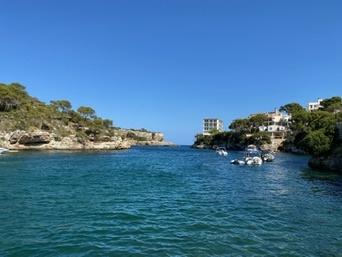
Cala Figuera
More Fotos