What is the history behind winemaking in Mallorca?
Similar Topics
Mallorca winemaking
Mallorca wine history
Phoenicians Mallorca
Mallorcan vineyards
Manto Negro grape
Callet grape
organic wineries Mallorca
Mallorca wine tastings
Mallorca terroir
Tramuntana mountains wine
Winemaking in Mallorca has a rich and fascinating history that dates back over two thousand years, with its roots firmly planted in ancient times when the island was settled by the Phoenicians around 1200 BC. These early settlers recognized the fertile lands and favorable climate of Mallorca, cultivating vineyards and introducing their winemaking techniques. The Romans, who followed the Phoenicians, further developed viticulture on the island, exporting Mallorcan wines throughout the Mediterranean. By the Middle Ages, winemaking had become firmly established, with monasteries playing a pivotal role in preserving and enhancing local viticultural practices.
The 19th century marked a significant turning point for Mallorcan wine. The phylloxera crisis that devastated vineyards across Europe surprisingly benefitted Mallorca, as the island's vines were largely unaffected due to its geographical isolation. This led to a renewed focus on quality and the establishment of new wineries. During this time, local grape varieties, such as Manto Negro and Callet, began to gain recognition, and winemakers started to embrace modern techniques while still honoring traditional methods.
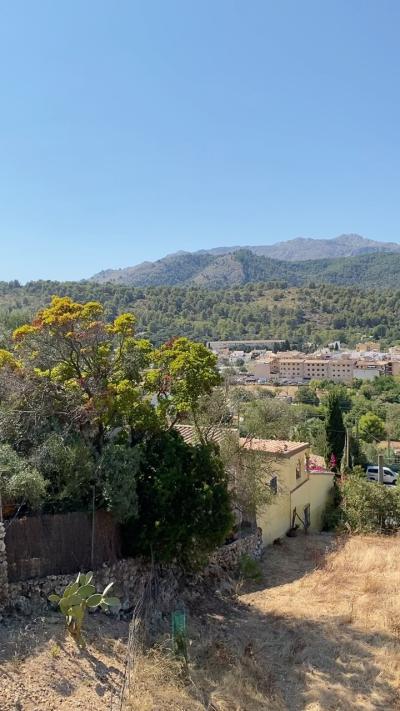
Today, Mallorca boasts a diverse range of wines, with an emphasis on both red and white varietals that reflect the island's unique terroir. The Mallorcan wine industry has undergone a renaissance in recent decades, with a growing number of boutique wineries committed to organic and sustainable practices. Visitors can explore the picturesque vineyards scattered across the island, often accompanied by breathtaking views of the Tramuntana mountains, and indulge in wine tastings that showcase the rich flavors and aromas characteristic of Mallorcan wines. With a blend of history, tradition, and innovation, Mallorca's winemaking scene offers an enriching experience for those eager to learn about this integral part of the island's culture.
The 19th century marked a significant turning point for Mallorcan wine. The phylloxera crisis that devastated vineyards across Europe surprisingly benefitted Mallorca, as the island's vines were largely unaffected due to its geographical isolation. This led to a renewed focus on quality and the establishment of new wineries. During this time, local grape varieties, such as Manto Negro and Callet, began to gain recognition, and winemakers started to embrace modern techniques while still honoring traditional methods.
Today, Mallorca boasts a diverse range of wines, with an emphasis on both red and white varietals that reflect the island's unique terroir. The Mallorcan wine industry has undergone a renaissance in recent decades, with a growing number of boutique wineries committed to organic and sustainable practices. Visitors can explore the picturesque vineyards scattered across the island, often accompanied by breathtaking views of the Tramuntana mountains, and indulge in wine tastings that showcase the rich flavors and aromas characteristic of Mallorcan wines. With a blend of history, tradition, and innovation, Mallorca's winemaking scene offers an enriching experience for those eager to learn about this integral part of the island's culture.
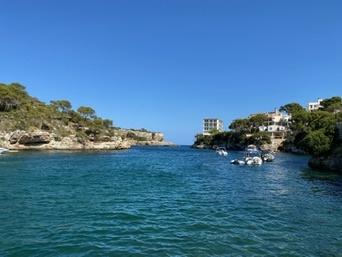
Cala Figuera
More Fotos