How did the war affect the population and demographics of Mallorca?
Similar Topics
Mallorca demographics
Spanish Civil War
Mallorca tourism
population migration
cultural diversity Mallorca
hospitality jobs Mallorca
expatriates in Mallorca
Mallorca history
island recovery
Mallorca community
The impact of war on Mallorca's population and demographics has been profound, particularly during the Spanish Civil War in the late 1930s and subsequent conflicts that influenced the region. The Spanish Civil War brought significant turmoil to the island, leading to a climate of fear and instability that caused many locals to flee. Some residents sought refuge in mainland Spain or other countries, while others found themselves displaced within their own communities. This migration altered the demographic landscape, as the island's population experienced a noticeable decline during this tumultuous period.
After the war, Mallorca underwent a gradual process of recovery and transformation. The 1950s and 1960s marked a turning point, as the island began to embrace tourism as a way to rejuvenate its economy. This influx of tourists not only brought economic benefits but also led to an increase in the population, as people from various parts of Spain and beyond moved to Mallorca for job opportunities in the burgeoning hospitality and service sectors. As a result, the demographics of the island became more diverse, with a mix of locals and newcomers contributing to a vibrant cultural tapestry.
In recent years, Mallorca has continued to evolve, with a significant rise in international residents drawn by the island’s natural beauty, mild climate, and quality of life. This has led to a further shift in demographics, with a growing number of expatriates and seasonal visitors enriching the local culture. Despite the scars left by historical conflicts, Mallorca has emerged as a welcoming destination that celebrates its unique identity while embracing the influences of its diverse inhabitants. Today, the island stands as a testament to resilience and adaptability, inviting travelers to explore its rich history and dynamic community.
After the war, Mallorca underwent a gradual process of recovery and transformation. The 1950s and 1960s marked a turning point, as the island began to embrace tourism as a way to rejuvenate its economy. This influx of tourists not only brought economic benefits but also led to an increase in the population, as people from various parts of Spain and beyond moved to Mallorca for job opportunities in the burgeoning hospitality and service sectors. As a result, the demographics of the island became more diverse, with a mix of locals and newcomers contributing to a vibrant cultural tapestry.
In recent years, Mallorca has continued to evolve, with a significant rise in international residents drawn by the island’s natural beauty, mild climate, and quality of life. This has led to a further shift in demographics, with a growing number of expatriates and seasonal visitors enriching the local culture. Despite the scars left by historical conflicts, Mallorca has emerged as a welcoming destination that celebrates its unique identity while embracing the influences of its diverse inhabitants. Today, the island stands as a testament to resilience and adaptability, inviting travelers to explore its rich history and dynamic community.
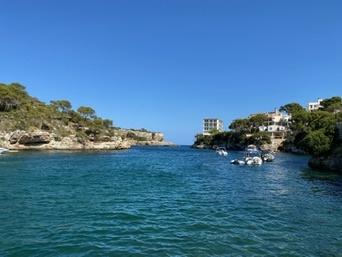
Cala Figuera
More Fotos