What changes occurred in Mallorca’s governance after the war?
Similar Topics
Mallorca governance
Spanish Civil War
Francisco Franco
Balearic Islands autonomy
Mallorca democracy
local governance structures
Mallorca tourism
cultural preservation Mallorca
Mallorcan identity
sustainability in Mallorca
After the Spanish Civil War, which ended in 1939, Mallorca, like the rest of Spain, underwent significant changes in governance. The island became part of the broader authoritarian regime established by Francisco Franco. This period was marked by a centralization of power, where local governance was heavily influenced by the national government in Madrid. The local institutions that had previously allowed some degree of autonomy were dismantled, and a strict control was imposed, stifling regional identities, languages, and cultures. Franco’s regime promoted a nationalist agenda that often marginalized regions like Mallorca, leading to a loss of political representation for the islanders.
In the years following Franco's death in 1975, Mallorca experienced a transformation as Spain transitioned to democracy. The 1978 Spanish Constitution recognized the right to self-governance, leading to the establishment of the Balearic Islands as an autonomous community. This shift allowed for the revival of local governance structures and a renewed emphasis on regional identity, culture, and language. The Balearic Parliament was formed, giving Mallorcans a voice in their own affairs, and an opportunity to address local issues such as tourism, environmental protection, and cultural preservation.
The changes in governance not only impacted the political landscape but also the social and economic fabric of Mallorca. The return of democracy facilitated an increase in tourism and investment, which has played a crucial role in revitalizing the island's economy. However, this rapid development has also raised concerns about sustainability and the preservation of Mallorca's unique heritage. Today, visitors can witness the vibrant blend of traditional Mallorcan culture alongside modern influences, a reflection of the island's journey through challenging historical changes and its ongoing evolution in governance and identity.
In the years following Franco's death in 1975, Mallorca experienced a transformation as Spain transitioned to democracy. The 1978 Spanish Constitution recognized the right to self-governance, leading to the establishment of the Balearic Islands as an autonomous community. This shift allowed for the revival of local governance structures and a renewed emphasis on regional identity, culture, and language. The Balearic Parliament was formed, giving Mallorcans a voice in their own affairs, and an opportunity to address local issues such as tourism, environmental protection, and cultural preservation.
The changes in governance not only impacted the political landscape but also the social and economic fabric of Mallorca. The return of democracy facilitated an increase in tourism and investment, which has played a crucial role in revitalizing the island's economy. However, this rapid development has also raised concerns about sustainability and the preservation of Mallorca's unique heritage. Today, visitors can witness the vibrant blend of traditional Mallorcan culture alongside modern influences, a reflection of the island's journey through challenging historical changes and its ongoing evolution in governance and identity.
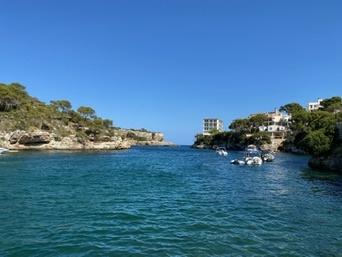
Cala Figuera
More Fotos