How did the economy of Mallorca compare to the rest of Spain during Franco's rule?
Similar Topics
Mallorca economy
Franco's rule
tourism in Mallorca
agriculture in Mallorca
Mallorca tourism history
Spanish Civil War impact
economic development in Spain
infrastructure investment Mallorca
service sector growth
Mallorca cultural landscape
During Franco's rule from 1939 to 1975, Mallorca's economy experienced significant changes that set it apart from the broader Spanish context. Initially, the island's economy was heavily reliant on agriculture, particularly the cultivation of crops like olives and almonds. However, this agrarian foundation began to shift dramatically in the 1950s with the rise of tourism, which became a pivotal factor in Mallorca's economic transformation. The Spanish government's push for economic development during this period led to increased investment in infrastructure and promotion of the island as a vacation destination, enticing both domestic and international visitors.
In contrast, mainland Spain was grappling with the aftermath of the Civil War and faced various economic challenges, including isolation and limited foreign investment. While some regions, particularly industrialized areas, began to recover, Mallorca's focus on tourism allowed it to experience a relative economic boom. The influx of tourists brought jobs and stimulated local businesses, leading to a burgeoning service sector that diversified the island's economy beyond agriculture. This economic growth, however, was not without its drawbacks, as the rapid development often came at the expense of the island's natural beauty and traditional ways of life.
By the end of Franco's regime, Mallorca had established itself as one of Spain's most important tourist destinations, contributing significantly to the national economy. The contrast between Mallorca's tourism-driven growth and the slower recovery of other regions highlighted the island's unique position within Spain during this period. Overall, while the rest of Spain was slowly rebuilding, Mallorca carved out a niche that would shape its economic future and influence its cultural landscape for decades to come.
In contrast, mainland Spain was grappling with the aftermath of the Civil War and faced various economic challenges, including isolation and limited foreign investment. While some regions, particularly industrialized areas, began to recover, Mallorca's focus on tourism allowed it to experience a relative economic boom. The influx of tourists brought jobs and stimulated local businesses, leading to a burgeoning service sector that diversified the island's economy beyond agriculture. This economic growth, however, was not without its drawbacks, as the rapid development often came at the expense of the island's natural beauty and traditional ways of life.
By the end of Franco's regime, Mallorca had established itself as one of Spain's most important tourist destinations, contributing significantly to the national economy. The contrast between Mallorca's tourism-driven growth and the slower recovery of other regions highlighted the island's unique position within Spain during this period. Overall, while the rest of Spain was slowly rebuilding, Mallorca carved out a niche that would shape its economic future and influence its cultural landscape for decades to come.
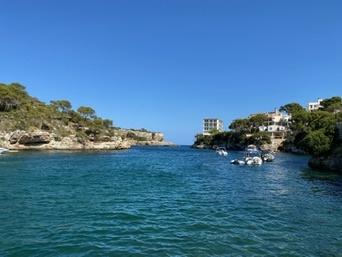
Cala Figuera
More Fotos