What role did Mallorca play in the broader context of the Spanish Civil War?
Similar Topics
Mallorca
Spanish Civil War
Nationalist forces
Franco regime
Balearic Islands
Mallorca history
political landscape
cultural impact
Mallorca museums
historical sites
Mallorca, like many parts of Spain, was significantly affected by the Spanish Civil War that lasted from 1936 to 1939. The island was initially a stronghold for the Nationalist forces led by General Francisco Franco, partly due to its strategic location in the Mediterranean. The war catalyzed a shift in Mallorca’s political and social landscape, as it became a focal point for both military operations and propaganda. Franco's forces sought to solidify their power in the Balearic Islands, and Mallorca served as a vital base for the Nationalist regime throughout the conflict.
During the war, the island experienced a mix of repression and resistance. While many Mallorcans supported the Nationalists, others opposed Franco’s regime, leading to an atmosphere of tension and fear. The conflict sparked significant changes in local governance and daily life, as political ideologies clashed. After the war, Mallorca, like the rest of Spain, entered a period of dictatorship under Franco, which had long-lasting impacts on its culture and society. The repercussions of these events can still be felt today, as locals reflect on the war's legacy and its influence on contemporary Mallorcan identity.
Visiting Mallorca offers a chance to explore this complex history through various sites and museums dedicated to the Spanish Civil War. The island's captivating landscapes and charming towns, often contrasted by the somber narratives of its past, provide a rich backdrop for understanding how the civil conflict shaped not only Mallorca but also the broader Spanish context. As you wander through the picturesque streets or relax on its stunning beaches, you may find it fascinating to consider the island's diverse history and the resilience of its people through turbulent times.
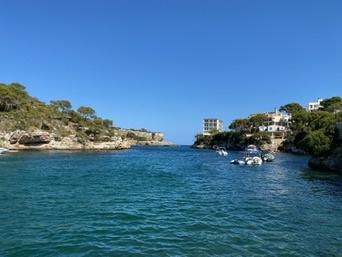
Cala Figuera
More Fotos