How has foreign investment affected employment and the local economy in Mallorca?
Similar Topics
foreign investment
mallorca employment
local economy
tourism jobs
binissalem wine
serra de tramuntana
hospitality sector
small businesses
If you spend time around Palma’s bustling markets or the artisan shops of Soller, you might notice how the landscape of jobs has changed thanks to foreign investment. Over recent years, international investors have brought new businesses and hotels, particularly along the coastlines near Alcudia and Cala d’Or, generating employment opportunities across tourism, construction, and service sectors. This influx often means more competitive wages compared to older local industries, benefiting many residents who find work in expanding hospitality and retail sectors.
Yet, the story isn’t purely positive. Some traditional trades and small family-run shops face stiff competition from larger foreign-backed enterprises, especially in the tourist hotspots like Port de Pollenca and Cala Formentor. While many new roles open up, higher-level positions tend to favour skilled professionals from abroad or those trained in multinational environments, limiting upward mobility for some locals. However, training programs linked with these companies have helped many Mallorcans enhance their skills, notably in hospitality and sustainable tourism.
Across the island’s varied economy, including agriculture in the Binissalem wine region and fishing villages, the balance between boosting local employment and preserving heritage businesses remains delicate. Riding the historic Soller railway or traveling the Ma-13 through the Serra de Tramuntana, it’s clear the island’s economy is evolving. Foreign capital has sparked growth, but it also challenges communities to maintain Mallorca’s unique character while welcoming new opportunities.
Yet, the story isn’t purely positive. Some traditional trades and small family-run shops face stiff competition from larger foreign-backed enterprises, especially in the tourist hotspots like Port de Pollenca and Cala Formentor. While many new roles open up, higher-level positions tend to favour skilled professionals from abroad or those trained in multinational environments, limiting upward mobility for some locals. However, training programs linked with these companies have helped many Mallorcans enhance their skills, notably in hospitality and sustainable tourism.
Across the island’s varied economy, including agriculture in the Binissalem wine region and fishing villages, the balance between boosting local employment and preserving heritage businesses remains delicate. Riding the historic Soller railway or traveling the Ma-13 through the Serra de Tramuntana, it’s clear the island’s economy is evolving. Foreign capital has sparked growth, but it also challenges communities to maintain Mallorca’s unique character while welcoming new opportunities.
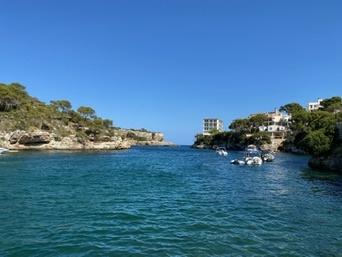
Cala Figuera
More Fotos